
The Core Ideas Behind Agile Software Development
Understand Agile methods, benefits, challenges, and how they differ from traditional development.
Learn how ASD uses short cycles, teamwork, and feedback to handle change.

What is adaptive software development? It is an agile method for work that may change often.
Adaptive Software Development, or ASD, grew from Rapid Application Development (RAD). It uses short cycles, close teamwork, and regular learning.
The adaptive software development meaning is simple. A team makes a broad plan, builds a useful part, and checks the result.
It then changes the next plan when new facts appear. This approach suits markets where customer needs can shift quickly.
ASD does not treat the first plan as fixed. It treats that plan as a useful guess.
Teams still set goals, limits, dates, and review points. They keep plans open when evidence calls for change.
The Agile Alliance overview of Adaptive Software Development describes this cycle as central to ASD.
A fixed plan tries to define most work before building starts. ASD accepts that some answers will come later.
This does not mean that ASD has no structure. The team still agrees on a product goal and cycle limits.
The main difference lies in how the team handles new information. A fixed plan may resist change.
ASD uses change to guide the next cycle. A working feature can reveal more than a long planning session.
Jim Highsmith and Sam Bayer developed ASD in the early 1990s. Their work answered a growing problem in software projects.
Formal plans often failed when customer needs changed. Market pressure could shift before a long project reached its final stage.
ASD built on Rapid Application Development. RAD stressed fast builds, early feedback, and close customer input.
Highsmith and Bayer saw that teams needed more than fast coding. They needed a way to learn from each delivery.
That idea helped shape wider agile methodologies. ASD supported a move from strict control toward shared learning.
Its history still matters today. Software teams face fast changes in tools, markets, risks, and user habits.
ASD is not a promise of endless speed. It is a way to make better choices as knowledge grows.
Its value comes from short feedback loops. These loops help teams spot weak ideas before they grow costly.

The ASD methodology uses three linked phases. These phases are speculate, collaborate, and learn.
They do not form a strict line. A team may return to an earlier phase after new feedback.
Speculation replaces false certainty with a useful direction. A team may plan two weeks of work instead of six months.
Collaboration keeps decisions close to the work. A tester may flag a risk before a feature reaches review.
A client may explain a rule that the first plan missed. This input can prevent costly rework.
Learning turns results into action. Teams can keep, change, delay, or drop a feature after each cycle.
This loop supports risk management. Teams find weak ideas before those ideas consume a large budget.
It also creates a steady flow of evidence. Evidence helps the team rank work with more care.
A small product test can act as an MVP (minimum viable product). It tests the main idea without building every feature.
Users can then give UAT (user acceptance testing) feedback. This shows whether the product meets real work needs.
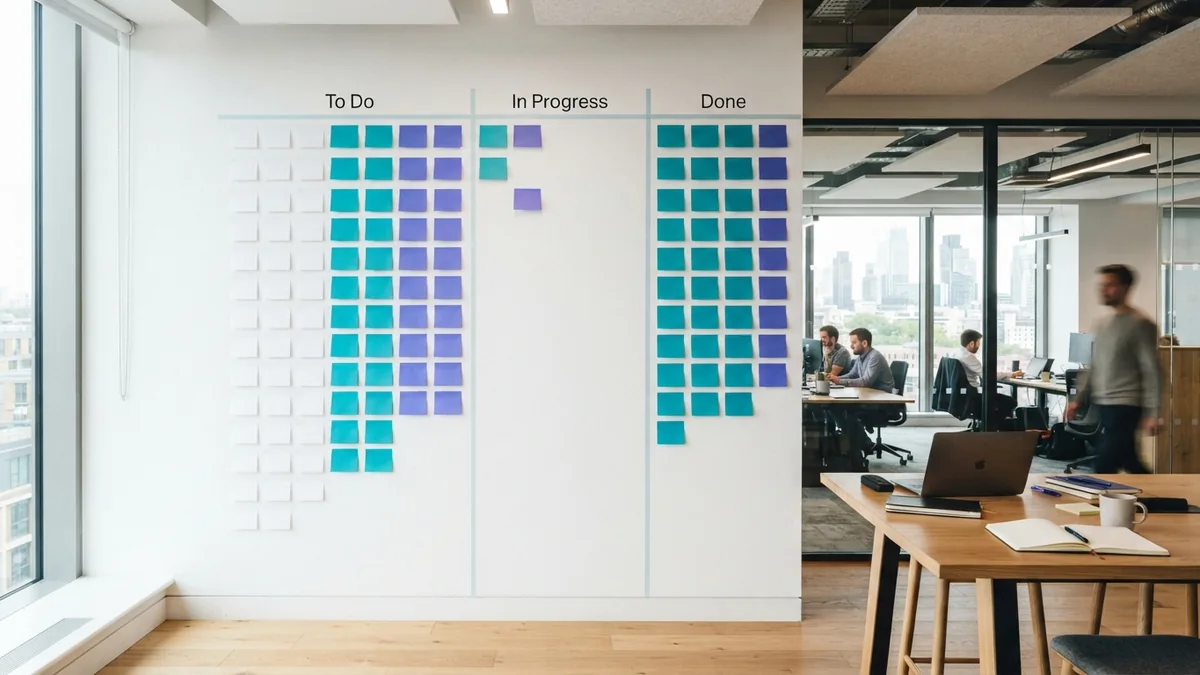
The main strength is better fit with user needs. Users see progress often and can correct the wrong path early.
ASD can also speed up useful delivery. A team may release a core feature after four weeks.
Later cycles can add more value. The product grows from tested needs rather than hopeful guesses.
Early releases create proof of progress. They also show which features matter most in real use.
Transparency improves as well. Clients can see finished work, open risks, and pending choices.
This shared view supports better software project management. It gives both sides a clear base for trade-offs.
ASD also supports steady team learning. Each review adds knowledge about users, tools, and limits.
That knowledge can improve estimates. It can also help teams spend time on the work that matters most.
Quality assurance (QA) fits well within this loop. QA checks each working slice instead of waiting for the end.
This approach can lower the risk of large defects. It also gives users more chances to shape the final result.

ASD needs strong user involvement. Without timely input, teams may build the wrong feature with great skill.
That input takes time from clients and users. Leaders must agree on who will join reviews and make choices.
ASD can also invite scope creep. Scope creep means that new requests keep expanding the work.
A clear backlog can limit this risk. Each new request should replace, delay, or fund another task.
Continuous testing can raise project costs. Testers need time, tools, data, and access to each new build.
Teams should plan that work from the start. Skipping tests may seem fast, but it creates late repair costs.
Frequent change can also tire a team. Developers need stable goals, even when details remain open.
Leaders can protect focus with short cycle goals. They should change direction only when new evidence supports it.
| Challenge | Useful response |
|---|---|
| Slow user feedback | Book review sessions before each cycle begins |
| Growing scope | Set a fixed cycle limit and rank every new request |
| Rising test costs | Automate repeat checks and test the highest risks first |
| Team fatigue | Keep cycle goals clear and protect time for recovery |

ASD works best when needs are unclear or likely to shift. It suits new products, changing markets, and complex user problems.
It also fits work that needs close team collaboration. Designers, developers, testers, and clients should share feedback often.
ASD may suit a new mobile service for a changing market. The team can test its main user flow before adding extra tools.
It can also help with a major system change. Early cycles can expose data, user, and process risks.
ASD may be a poor fit when every detail must stay fixed. Some work has strict rules, fixed parts, or set delivery steps.
Even then, teams may use ASD inside a wider plan. They can adapt low-risk parts while keeping key controls in place.
Before choosing ASD, check access to users and decision makers. Also check whether the budget can support repeated testing.
Then define success in clear terms. A good target might cover user value, release speed, quality, and cost.
Adaptive Software Development helps teams act on new knowledge. It replaces rigid plans with short cycles and clear learning.
Its three phases are speculate, collaborate, and learn. Together, they support flexible delivery without removing goals or limits.
ASD brings strong gains when users can join the work. It can improve fit, speed, trust, and risk control.
It also brings real demands. Teams must manage scope, fund testing, and keep feedback flowing.
Used in the right setting, ASD turns change into useful guidance. That makes it a lasting choice among agile software development methods.
Understand Agile methods, benefits, challenges, and how they differ from traditional development.
Learn Agile principles, frameworks, testing methods, and key differences from Waterfall.
See how innovation centers turn engineering ideas into tested products.