What Does SaaS Mean? How the Software Model Works
A clear guide to SaaS, its business model, benefits, and risks.
A clear guide to SaaS, its benefits, risks, and cloud model choices.

What is software as a service SaaS? It is software that runs online. You open it through a browser or mobile app. You do not install the main system on each device.
The provider hosts the app and manages its cloud tools. It also handles updates, fixes, backups, and much of the upkeep. Customers often pay through a subscription model.
This software as a service meaning covers a finished app delivered over the internet. NIST's cloud computing definition places SaaS at the top of the cloud service stack. Customers use the app without managing its servers or core code.
Common SaaS applications include email, file storage, CRM software, project tools, and video meetings. Google Workspace, Microsoft 365, Salesforce, and Slack are well-known examples.
A SaaS provider runs its app in a cloud data centre. The app connects to storage, databases, and other cloud services. Users reach it through a secure internet link.
Most SaaS products use multi-tenancy. One software system serves many customer groups. Each group has separate data, settings, and access rules.
Shared resources help spread costs across many clients. This can lower prices and support fast growth. Strong controls must still keep each account apart.
A normal SaaS session follows these steps:
One central release can reach every customer at once. This cuts local software deployment work. It can also bring new features faster.

SaaS lowers the work needed to start using business software. A team can create accounts and begin work within hours. It may not need new servers or local installers.
Subscription pricing spreads costs over time. Plans may charge per user, by use, or by feature level. A small firm can start with five seats and add more later.
Access is another strong benefit. Staff can use the same service from many locations. They need a supported device and a stable connection.
SaaS can also support trials and freemium models. A free plan lets users test basic features. Paid plans may add storage, users, or admin controls.

SaaS is not right for every workload. A service may depend on a good internet link. An outage can block access to key tools.
Customers also give the provider control over hosting and updates. They may not choose the release date. Features, limits, and prices may change over time.
Data security in SaaS needs close review. Ask where data is stored and who can reach it. Check backups, breach plans, and account recovery steps.
Customisation can also be limited. An app may support settings and add-ons. It may not match the deep changes possible with custom software.
Vendor lock-in can grow over time. Your team may build work around one product. Moving later can cost time, money, and staff effort.

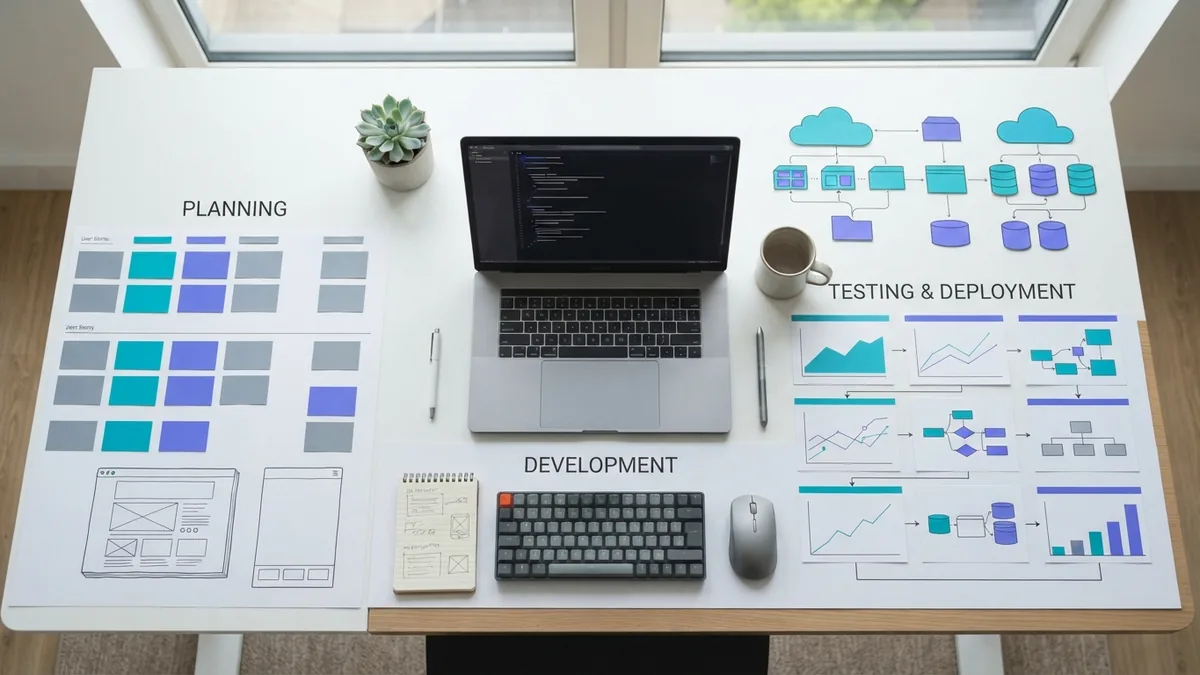
What is software development? It is the work of planning, building, testing, and improving software. SaaS teams use this work to create secure apps that can grow.
What is software development process work in a SaaS firm? It turns a user need into code, tests, releases, and later fixes. A clear plan helps the team ship useful features with less waste.
What is software development lifecycle work? It is the full path from idea to support. What is software development cycle work? It is the repeated loop of plan, build, test, release, and learn.
What is a software development plan? It sets the goals, tasks, risks, dates, and owners for a product. The plan should also cover uptime, data safety, support, and exit needs.
What is software development methodology? It is the team's chosen way to plan and deliver work. What are the software development models? Common models include agile, waterfall, and a mix of both.
What are software development tools? They are tools for writing code, tracking work, testing features, and watching live systems. Good tools help teams find faults before users see them.
What is a software development engineer? This engineer builds and maintains software. What is software development engineer in test work? It means creating code and tests that check software quality.
What do you do in software development? You may study needs, design features, write code, test changes, fix faults, or guide releases. What can you do with a software development degree? You can pursue roles in coding, testing, cloud work, product design, or technical support.
Cloud computing offers three common service models. SaaS gives you a finished application. IaaS and PaaS give technical teams more control.
IaaS means Infrastructure as a Service. The provider supplies servers, storage, and networks. Your team manages the operating system, apps, and much of the setup.
PaaS means Platform as a Service. It provides a ready base for building and running software. Developers can focus on code without managing every server layer.
| Model | Customer manages | Best fit |
|---|---|---|
| SaaS | Users, settings, and business data | Teams that need a ready app |
| PaaS | Code, data, and app settings | Teams building online apps |
| IaaS | Systems, apps, data, and settings | Teams needing deep control |
Choose SaaS when speed and low upkeep matter most. Choose PaaS or IaaS when your team needs more control.
What is a software development company? It is a firm that plans, builds, tests, or supports software for clients. Some firms build full SaaS products. Others add a feature or repair an existing system.
What is software application development? It is the build of software for a clear user task. What is software product development? It covers the wider path from market need to launch and long-term growth.
What is software development outsourcing? It means hiring an outside team to handle some or all build work. What is software outsourcing? It is the wider practice of sending software tasks to an external provider.
What is software outsourcing definition in plain terms? It is a work deal where an outside firm supplies skills, code, tests, or support. It can help a firm fill skill gaps, lower costs, or speed up a launch.
Set clear goals before you choose an outside team. Define ownership, security duties, handover rules, support times, and data access. Keep product decisions close to the business.
SaaS adoption continues across sales, finance, health, retail, and public services. Firms use it to add tools without buying large server estates. Remote access also supports teams across many sites.
Many products now connect through shared data links and add smart features. Buyers want stronger controls, clear data use, and easy exports. They also want tools that work well with current systems.
The global SaaS market is set to grow as more firms move work online. Growth will not remove the need for careful checks. Buyers still need to weigh price, risk, support, and exit plans.
The strongest products tend to solve one clear need. They also make setup, training, and data moves simple. Ease of use wins long-term trust.
SaaS gives users online access to a ready application. The provider hosts the system and handles most upkeep. This makes SaaS fast to start and simple to scale.
The trade-off is less control over hosting, updates, data moves, and deep changes. Review security, service terms, exports, support, and exit costs before you commit.
SaaS works best when ease, shared access, and steady costs matter. IaaS or PaaS may suit teams that need deeper control. Match the model to the work, risk, and skills you have.
A clear guide to SaaS, its business model, benefits, and risks.
A clear guide to SaaS, its benefits, pricing models, examples, and risks.
See how innovation centers turn engineering ideas into tested products.