
How the Model Context Protocol Works in AI
A clear guide to MCP, its parts, benefits, risks, and AI use cases.
See how MCP helps AI agents use tools, data, and cloud systems safely.

What is MCP in agentic AI? MCP is an open protocol that lets AI agents use outside tools and data in a common way. Anthropic introduced the Model Context Protocol in November 2024. Its goal was simple. AI systems needed one standard link to databases, files, apps, and cloud tools.
MCP works much like a universal connector. An agent can find a tool, learn its inputs, and request an action through the same protocol. This cuts the need for a custom link between every model and every service. Anthropic explains the idea in its Model Context Protocol announcement.
The protocol does not make a model intelligent by itself. It gives that model a clear way to reach useful tools. The agent still needs rules, goals, access rights, and checks.
Agentic AI describes systems that can plan, act, and review results with limited human help. A normal chatbot gives an answer after one prompt. An agent can break a goal into steps and choose tools for each step.
What is an agentic LLM? It is a large language model used as part of an action loop. The model reads the goal, picks a next step, calls a tool, and studies the result. It then repeats the loop until it reaches a stop rule.
For example, a support agent might check an order database. It could then draft a reply and open a refund request. A human may approve the final payment change. The agent handles the routine work.

MCP gives agents a shared way to discover and use tools. A server can describe its available actions, data, and input rules. The client can then ask for that information before it acts.
What is MCP for agentic AI in practice? It is a bridge between the reasoning layer and the work layer. The model decides what it wants to do. An MCP server carries out the task within its own system.
MCP can expose three main types of service. Tools perform actions, resources provide data, and prompts offer ready-made task patterns. This split helps teams set clear limits for each connection.
| MCP part | Purpose | Example |
|---|---|---|
| Tool | Performs an action | Create a ticket |
| Resource | Provides information | Read a project file |
| Prompt | Guides a task | Review a support case |
What is an MCP server in agentic AI? It is a small service that gives an agent access to a defined set of tools or data. The agent acts as the MCP client. The client connects to one or more servers.
MCP uses a client-server model. It sends messages through JSON-RPC, a format for remote requests and replies. The client first starts a session and checks what the server supports. It can then list tools, send inputs, and receive results.
A typical flow has five steps:
The server should validate every input. It should also log each request. A failed task must return a clear error. These steps make faults easier to spot.
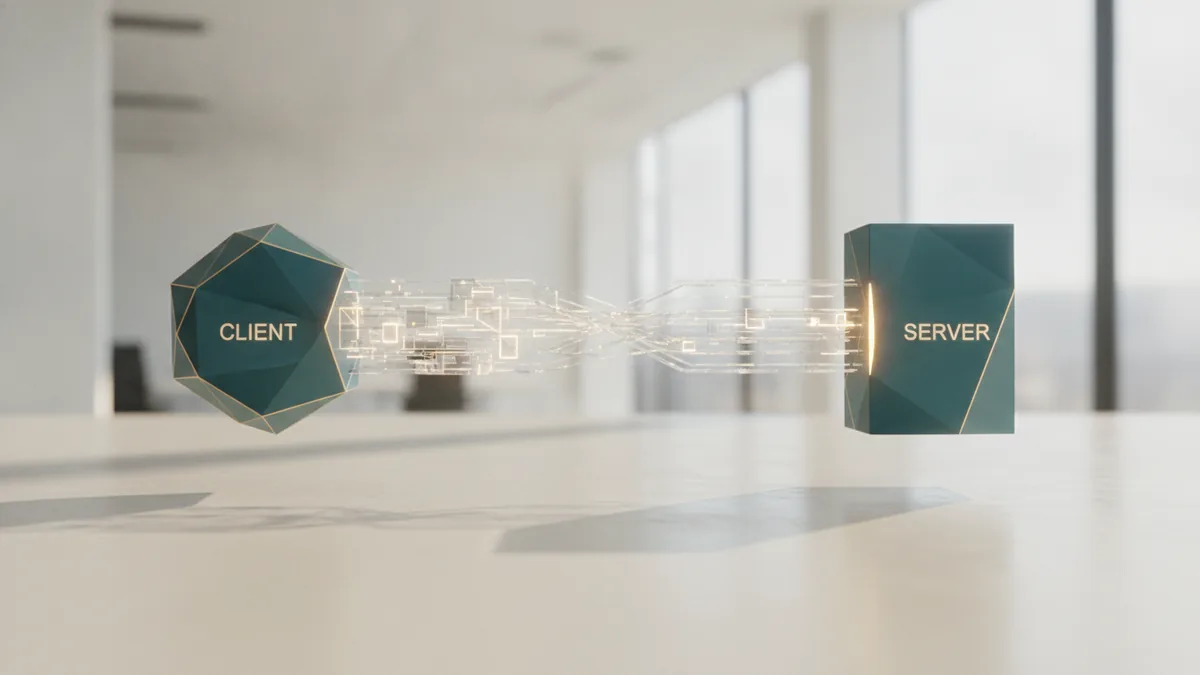
MCP can connect an agent to many work systems. These may include databases, code tools, cloud platforms, file stores, and ticket systems. The same agent can use several servers during one task.
Consider a release assistant. It might read an issue tracker, inspect test results, and check cloud status. It could then prepare a release note for review. Each task can run through a separate MCP server.
MCP also supports work across varied environments. A team can run one server on a local machine and another in the cloud. The agent sees a shared tool pattern, even when the back-end systems differ.
This model can speed up routine work. It can also reduce one-off code between services. Yet broad access makes careful design vital.
MCP brings a new security issue into focus. An agent may act through a non-human identity, or NHI. This identity can have keys, tokens, and access rights. It may also act at machine speed.
Credential management is one major risk. A leaked token could let an agent read data or change a cloud resource. A server with weak checks could accept harmful inputs. Prompt injection may also trick an agent into using a tool in an unsafe way.
Access oversight creates another challenge. Teams must know which agent used which tool, when it acted, and what it changed. Logs alone are not enough. Each action needs an owner, a purpose, and a clear limit.
Use these controls when building an MCP setup:

Teams should also review server code and data paths. The official MCP specification defines the protocol rules. It does not remove the need for sound security design.
MCP matters because useful agents need more than model knowledge. They need live data and safe action paths. A standard protocol can lower the cost of adding those links.
It can also help teams swap models or tools with less rework. A company may change its model provider while keeping the same server links. That choice can reduce lock-in and shorten build time.
The gains come with trade-offs. An agent with five tool links has more ways to fail than a chatbot with no tool access. Each new server adds a trust boundary, a data path, and a possible attack route.
| Potential gain | Needed guardrail |
|---|---|
| Faster task handling | Clear stop rules |
| Shared tool access | Strong access checks |
| Less custom code | Server testing |
| Live business data | Data scope limits |
Major technology firms and developer teams have shown strong interest in MCP. That adoption points to a wider shift. AI assistants are moving from answer tools toward systems that can complete work.
Future MCP systems may offer better server discovery, stronger approval flows, and richer audit logs. They may also support more precise limits for data and actions. Shared rules could make agent tools easier to build and test.
Security will shape that growth. Businesses will need clear ownership for every NHI. They will need to track access across agents, servers, and cloud accounts. They must also decide which tasks need human review.
The best use of MCP is not unlimited autonomy. It is controlled autonomy. Give an agent useful tools, narrow rights, strong logs, and a safe way to stop. That approach can deliver speed without handing over unchecked control.

A clear guide to MCP, its parts, benefits, risks, and AI use cases.
A clear guide to MCP servers, AI tools, real-time data, and safe use.
See how innovation centers turn engineering ideas into tested products.